The word “accountability” gets thrown around like it’s some kind of magic bullet. Join an accountability group. Find an accountability partner. Hold yourself accountable. As if the solution to every unmet goal is just more pressure and someone watching you fail.
But here’s what I’ve noticed: the people seeking accountability are rarely the ones who need motivation. They’re the ones drowning in good intentions, buried under systems that don’t actually work, carrying the mental load of remembering everything while being told their problem is discipline.
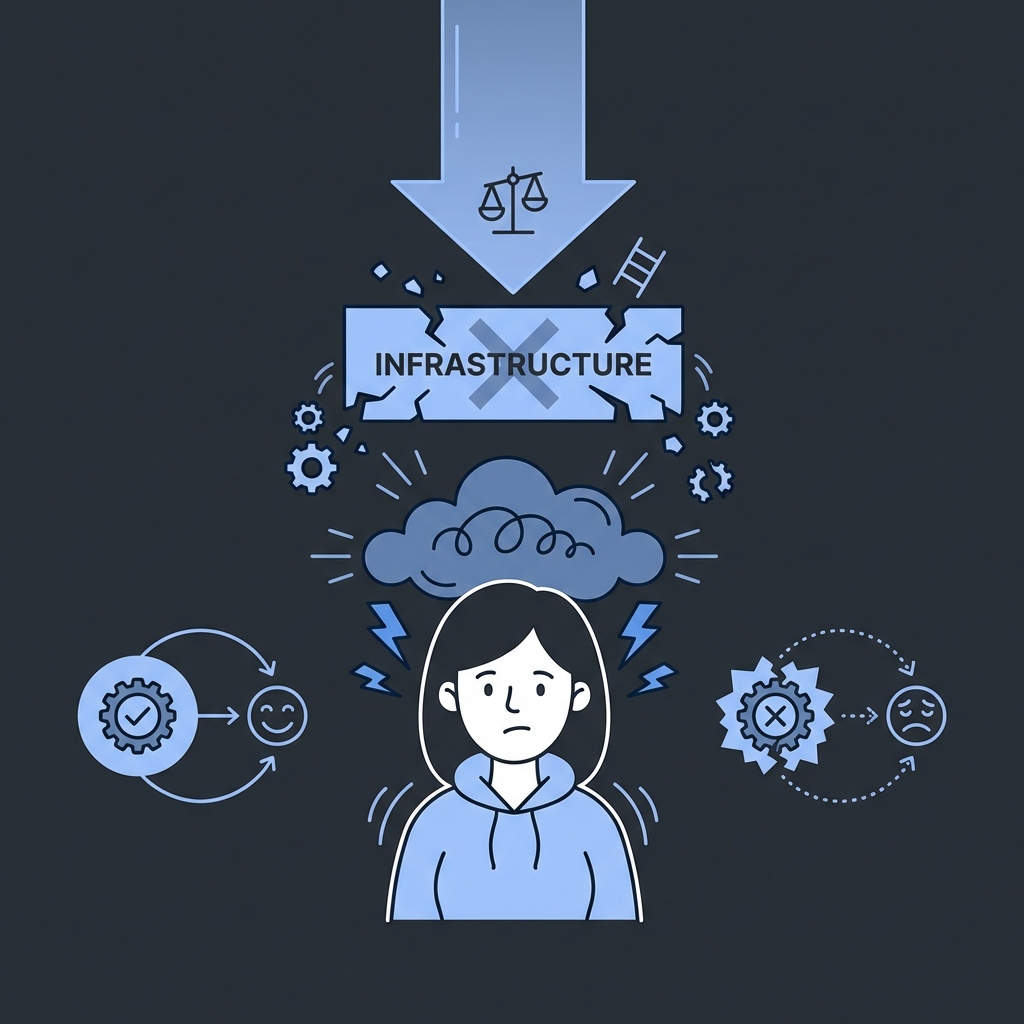
Real accountability isn’t about having someone check if you did the thing. It’s about building infrastructure that makes the thing possible to do consistently. Without that infrastructure, accountability becomes surveillance. And surveillance, for people already stretched thin, feels a lot like shame.
The Accountability Trap
When most people say they need accountability, they’re describing a fantasy. They imagine someone who will gently but firmly remind them to stick to their goals, celebrate their wins, and somehow motivate them through the hard parts. What they usually get instead is someone asking, “Did you do it?” with the implicit judgment that follows a “no.”
This version of accountability assumes the only thing standing between you and your goals is willpower. It treats every missed workout, delayed project, or abandoned habit as a character flaw rather than a systems failure. The accountability partner becomes a external conscience, which sounds helpful until you realize you’re now carrying the emotional weight of disappointing someone else on top of disappointing yourself.
I’ve watched this play out countless times. Someone joins a fitness accountability group and feels great for the first few weeks. The check-ins provide structure, the group energy feels motivating, and there’s something powerful about declaring your intentions publicly. But then life happens. Work gets busy, a kid gets sick, or they simply have a bad week. Suddenly the group that felt supportive starts feeling like a tribunal.
The people seeking accountability are rarely the ones who need motivation. They’re the ones drowning in good intentions.
The problem isn’t the accountability itself—it’s that accountability without infrastructure is just organized pressure. And pressure, applied to people who are already managing too much, doesn’t create sustainable change. It creates anxiety.
Why Pressure Backfires
Pressure works in the short term because it activates our stress response. We get a hit of urgency that can push us through resistance and into action. This is why deadlines work, why public commitments can be effective, and why accountability groups see initial success.
But pressure is a finite resource. Apply it consistently, and it stops working. Worse, it starts working against you. The stress response that once motivated you now triggers avoidance. The check-ins that used to feel supportive now feel like judgment. The goals that excited you become sources of dread.
This is especially true for people who are already carrying significant mental load. Working parents, caregivers, solopreneurs—the people most likely to seek accountability systems—are often operating at capacity. Adding pressure to an overloaded system doesn’t create more capacity. It creates breakdown.
I think about the mom who joins a morning workout accountability group because she “needs the motivation,” then spends her evenings anxious about whether she’ll wake up early enough, whether her partner will handle the morning routine, whether she’ll have clean workout clothes. The accountability became another thing to manage, another potential failure point, another source of mental load.
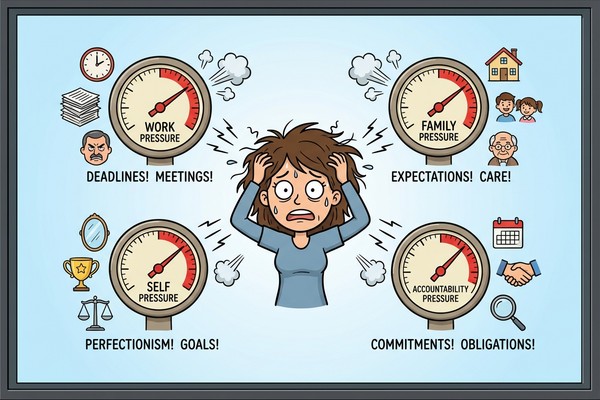
The cruel irony is that the people who seek accountability are usually the ones who are already hard on themselves. They don’t need external pressure—they need external support.
The Missing Infrastructure Layer
Here’s what gets lost in most accountability conversations: the gap between intention and execution isn’t usually about motivation. It’s about logistics.
You want to exercise regularly? The motivation might be there, but what about the logistics of scheduling, the system for having clean clothes ready, the backup plan for when your usual time doesn’t work? You want to eat healthier? Great, but who’s handling meal planning, grocery shopping, prep time, and the decision fatigue of choosing what to cook every night?
Most goals fail not because people don’t want them badly enough, but because the infrastructure to support them doesn’t exist. Real accountability addresses this infrastructure gap. It’s not just asking “Did you do it?” but “What made it hard to do? What would make it easier next time? What support do you need to make this sustainable?”
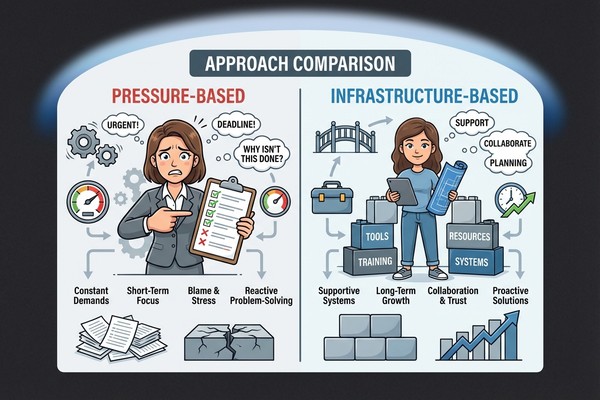
This is the difference between accountability that feels like support and accountability that feels like surveillance. Support acknowledges that execution is complex and helps you build systems that work. Surveillance just monitors whether you’re complying with your stated intentions.
Consider the difference between these two approaches:
Surveillance approach: “Did you work out this week? How many times? Why didn’t you meet your goal?”
Infrastructure approach: “What got in the way of working out this week? What would need to be different for it to feel more doable? What support would help you follow through more consistently?”
One creates shame. The other creates solutions.
When Accountability Becomes Shame
The surveillance model of accountability is particularly toxic because it activates shame in people who are already struggling. When someone asks “Did you do it?” and the answer is no, the implicit message is that you’ve failed. Not that your system failed, not that your circumstances were challenging, not that you need different support—you failed.
This triggers what researchers call “shame spirals”—cycles where the emotional pain of perceived failure makes the behavior harder to do next time. The accountability that was supposed to motivate you instead becomes a source of dread. You start avoiding check-ins, making excuses, or abandoning the goal entirely rather than face another conversation about your “lack of follow-through.”
Without infrastructure, accountability becomes surveillance. And surveillance, for people already stretched thin, feels a lot like shame.
I’ve seen this happen with writing groups where members stop showing up rather than admit they didn’t write. With fitness challenges where people drop out rather than report another missed workout. With business masterminds where entrepreneurs ghost the group rather than explain why they didn’t hit their revenue goals.
The tragedy is that these people often abandon goals that were genuinely important to them, not because they stopped wanting them, but because the accountability system made pursuing them feel worse than giving up.
A Better Frame: Values + Infrastructure
What if we reframed accountability entirely? Instead of “holding someone accountable” to their stated actions, what if we held them accountable to their stated values—and then built infrastructure to make value-aligned actions easier?
This shifts the conversation from compliance to alignment. Instead of “Did you do what you said you’d do?” it becomes “Are your actions reflecting what you care about? And if not, what’s getting in the way?”
This approach acknowledges that sometimes the most value-aligned choice is to not do the thing you planned. Maybe skipping the workout to care for a sick child is actually more aligned with your values than forcing yourself to exercise out of obligation to an accountability group. Maybe missing a business networking event to get adequate sleep is the choice that serves your long-term goals, even if it disappoints your accountability partner.
Values-based accountability creates space for context and flexibility. It recognizes that sustainable behavior change happens when your actions feel connected to what you care about, not when you’re complying with external expectations.
But values alone aren’t enough. You also need infrastructure—the systems, reminders, preparations, and buffers that make value-aligned actions feasible. This is where most accountability systems fail. They focus on the “why” (motivation) and the “what” (goals) but ignore the “how” (logistics).
The Logistics Question
Here’s a simple but powerful question that can transform how you think about any goal: What part of this is logistics, not motivation?
Most people assume their struggles are motivational. They think they need more discipline, more willpower, more accountability pressure. But when you dig deeper, the real barriers are usually logistical:
- You want to cook more meals at home, but you don’t have a system for meal planning or grocery shopping
- You want to exercise regularly, but you don’t have a consistent time slot or backup plan for busy days
- You want to write more, but you don’t have a designated space or a way to minimize distractions
- You want to follow up with leads consistently, but you don’t have a system for tracking conversations or scheduling reminders
Once you identify the logistical barriers, you can build infrastructure to address them. This might mean batch-preparing meals on weekends, setting up automatic calendar blocks for exercise, creating writing templates to reduce decision fatigue, or using a CRM system to automate follow-ups.
The beautiful thing about addressing logistics is that it reduces the need for willpower. When the infrastructure is in place, following through becomes easier, not because you’re more disciplined, but because you’ve removed friction from the process.
Beyond Individual Willpower
The most effective accountability systems I’ve seen operate at the infrastructure level. They don’t just monitor behavior—they actively support it. They provide reminders, reduce decision fatigue, create buffers for unexpected challenges, and make the desired behavior the path of least resistance.
This might look like a meal delivery service that removes the logistics of meal planning and grocery shopping. A calendar system that automatically blocks time for priorities and sends preparation reminders. A project management tool that breaks complex goals into manageable steps and tracks dependencies. A support network that shares resources and provides backup when plans fall through.
These systems work because they address the real barriers to consistent action. They recognize that sustainable behavior change isn’t about wanting something more—it’s about making it easier to do.
The goal isn’t to eliminate all challenges or make everything effortless. It’s to build infrastructure that can handle the normal friction of life without requiring heroic levels of willpower or perfect circumstances.
Real accountability isn’t about having someone check if you did the thing. It’s about building infrastructure that makes the thing possible to do consistently.
When someone asks if you need more accountability, the real question might be: Do you need someone to watch you struggle, or do you need systems that make struggling less necessary? Do you need pressure, or do you need support? Do you need to be held accountable to your intentions, or do you need infrastructure that makes your intentions achievable?
The answer, for most of us carrying too much already, is infrastructure. We don’t need more pressure. We need systems that hold less, so we can too.
This article was created with collaboration between humans and AI—we hope you ❤️ it.