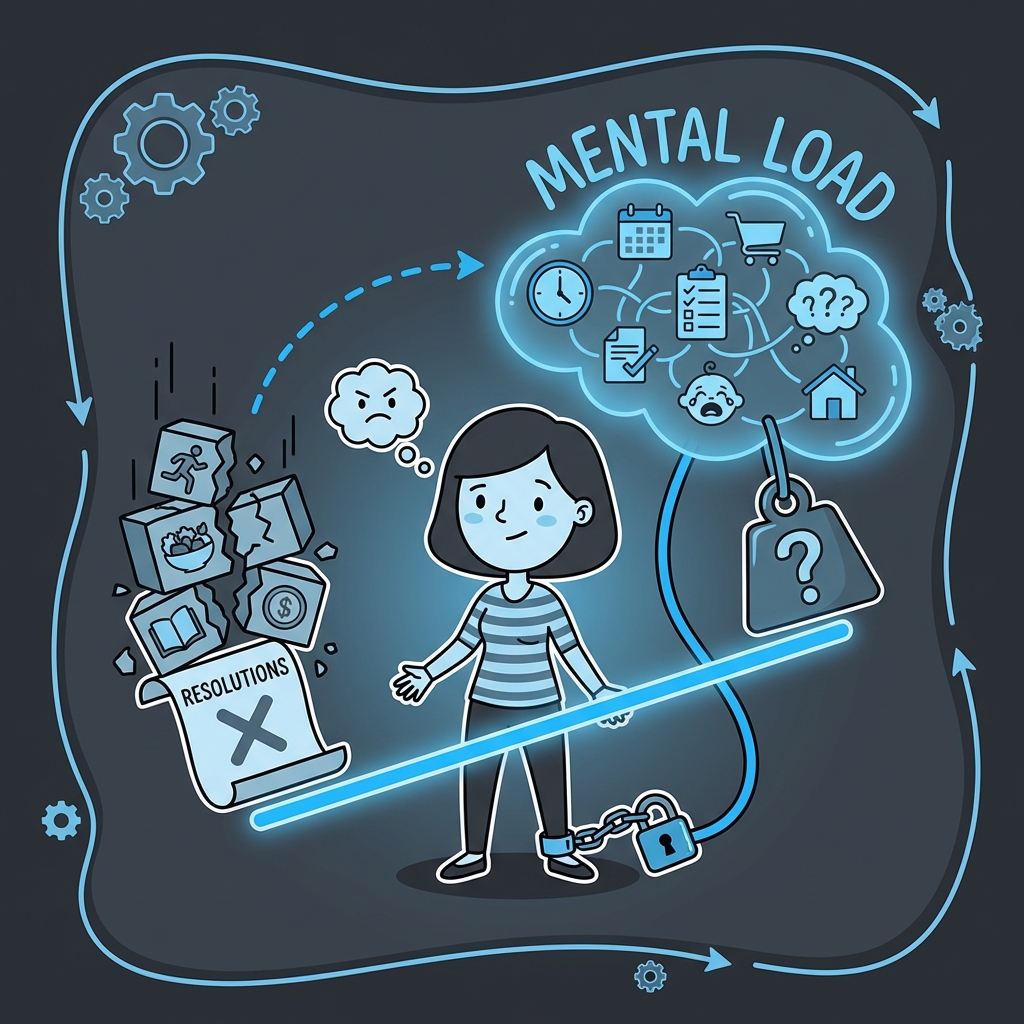
Every January, millions of people set resolutions with genuine hope and determination. They buy gym memberships, download habit trackers, and make elaborate plans for transformation. Then February arrives, and most of those resolutions quietly fade into guilt and self-recrimination.
The conventional wisdom blames lack of willpower, insufficient motivation, or poor planning. But what if the real problem isn’t your discipline—it’s that you’re already carrying too much?
Most resolution advice operates from a hidden assumption: that you have spare cognitive capacity just waiting to be deployed toward positive change. It assumes your mental bandwidth isn’t already maxed out by the invisible work of coordinating family schedules, tracking work deadlines, remembering maintenance tasks, and anticipating everyone else’s needs.
You can’t pour from an empty cup, but most resolution frameworks assume your cup is half-full and ready for more.
This isn’t about time management. You might have carved out thirty minutes for that morning workout or evening meditation. The issue is mental load—the cognitive overhead of remembering, tracking, coordinating, and anticipating that runs constantly in the background of your life. When your brain is already working overtime just to keep existing systems running, adding new habits becomes another burden rather than a gift to yourself.
The Invisible Competition for Your Attention
Think about what’s actually happening in your mind when you try to establish a new habit. You’re not just deciding to go to the gym—you’re negotiating with a mental system that’s already managing dozens of ongoing concerns.
Your brain is simultaneously tracking that your kid’s permission slip is due tomorrow, your partner’s work travel schedule next week, the fact that you’re running low on groceries, and that weird noise the car made yesterday that you should probably get checked. It’s holding space for your mother-in-law’s birthday next month, the project deadline that got moved up, and the nagging worry about whether you responded to that important email.
Into this cognitive environment, you introduce a resolution: “I will work out every morning at 6 AM.” Your conscious mind is committed, but your mental operating system is already at capacity. The new habit becomes just another thing to remember, track, and feel guilty about when it doesn’t happen seamlessly.
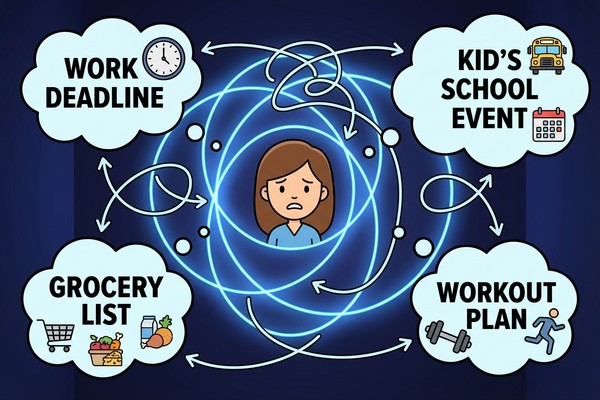
This is why people often succeed at resolutions during vacations or major life transitions—not because they suddenly develop more willpower, but because their usual mental load is temporarily reduced. When you’re not managing your normal cascade of responsibilities, you actually have cognitive space for change.
Why Shame Is the Predictable Outcome
When resolutions fail under these conditions, shame becomes almost inevitable. You made a commitment to yourself and didn’t follow through. The productivity culture narrative tells you this reveals something fundamental about your character—that you lack discipline, commitment, or the right mindset.
But shame is actually a predictable byproduct of overload, not a character flaw. When your mental resources are stretched thin, your brain naturally prioritizes immediate, urgent demands over long-term goals. The permission slip that’s due today will always win against the workout that could happen tomorrow.
The cruel irony is that shame itself becomes additional mental load. Now you’re not just tracking your regular responsibilities—you’re also carrying the emotional weight of perceived failure. You’re managing the story you tell yourself about why you “can’t stick to anything” and the anxiety about trying again.
Shame about failed resolutions isn’t evidence of weak character—it’s evidence of an overloaded system trying to convince itself the problem is personal rather than structural.
This creates a vicious cycle. The more mental load you carry, the harder it becomes to establish positive changes. The harder it becomes to change, the more shame you accumulate. The more shame you carry, the heavier your mental load becomes. Most resolution advice not only fails to break this cycle—it actively reinforces it by suggesting the solution is more planning, better systems, or stronger willpower.
A More Humane Sequence
What if we flipped the conventional approach? Instead of adding new habits to an already overloaded system, what if we started by reducing load first?
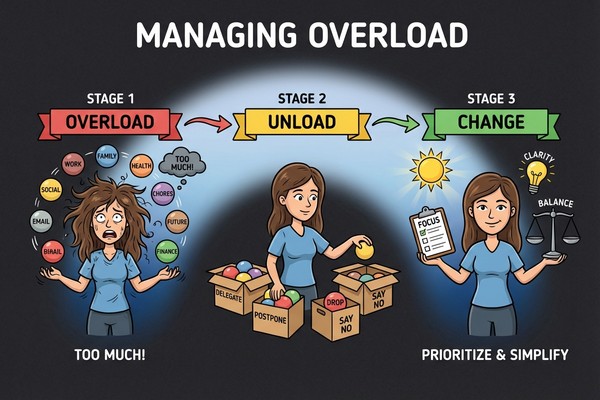
This suggests a different sequence entirely: unload → stabilize → iterate.
Unload means identifying and reducing the cognitive burdens that are consuming your mental bandwidth unnecessarily. This isn’t about doing less—it’s about carrying less. It’s the difference between handling fewer tasks and remembering fewer things.
Stabilize means allowing your system to settle at this reduced load before introducing new elements. This isn’t procrastination—it’s creating the conditions where change can actually take root.
Iterate means introducing new habits or goals gradually, with full awareness of their cognitive cost, rather than pretending they’re “free” additions to your life.
Let’s get concrete. Before committing to any resolution, try this exercise: Name three mental loads that would need to be lighter for your intended change to have a real chance of sticking.
Maybe it’s:
- The constant mental tracking of everyone’s schedules and needs
- The ongoing coordination of household maintenance and repairs
- The background worry about work projects and deadlines
These aren’t things you necessarily need to eliminate entirely, but they are cognitive burdens that could be systematized, delegated, or supported in ways that reduce their mental overhead.
What Real Support Actually Looks Like
Most productivity tools and resolution frameworks still put the burden of remembering and tracking back on you. They give you better ways to organize your mental load, but they don’t actually reduce it.
Real support means systems that take ownership of outcomes, not just organization. It means tools that remember for you, follow up without your input, and coordinate across contexts so you don’t have to hold all the connections in your head.
This looks like:
- Context without setup — Systems that understand your situation without requiring extensive initial configuration
- Coordination without oversight — Tools that manage the relationships between different areas of your life so you don’t have to
- Follow-up without reminders — Support that tracks progress and next steps without you having to remember to check in
The goal isn’t to optimize your ability to carry more mental load—it’s to help you carry less so you have space for the changes that actually matter to you.
The Permission to Start Differently
Here’s what most resolution advice gets wrong: it assumes the problem is with your approach to change rather than with the conditions that make change possible in the first place.
You don’t need more discipline. You don’t need better habits. You don’t need a more detailed plan or a more sophisticated tracking system.
You need cognitive space. You need mental bandwidth. You need systems that hold things for you instead of just helping you hold them better.
The most radical act might not be adding something new to your life—it might be removing something you’ve been carrying that was never yours to carry in the first place.
This January, instead of asking “What do I want to change?” try asking “What do I want to stop remembering?” Instead of “What habits do I want to build?” ask “What mental load do I want to unload?”
The changes you want to make in your life are still valid and worthwhile. But they deserve better conditions than a mind that’s already running at capacity. They deserve space to grow, not just determination to squeeze them in.
Your resolutions didn’t fail because you lacked discipline. They failed because you were trying to plant seeds in soil that was already depleted. The solution isn’t better seeds or more effort—it’s better soil.
If this resonates, we’re building something that might help. Backlit is designed to reduce mental load by actually remembering, tracking, and following up on the things that matter—so you don’t have to. We’re currently in development, but you can join our waitlist and try our starter app to begin identifying the areas where you most need support.
Because the change you want to make in your life shouldn’t have to compete with everything else you’re already carrying. It should have space to breathe, grow, and become part of who you are—not just another thing on your mental list.
This article was created with collaboration between humans and AI—we hope you ❤️ it.