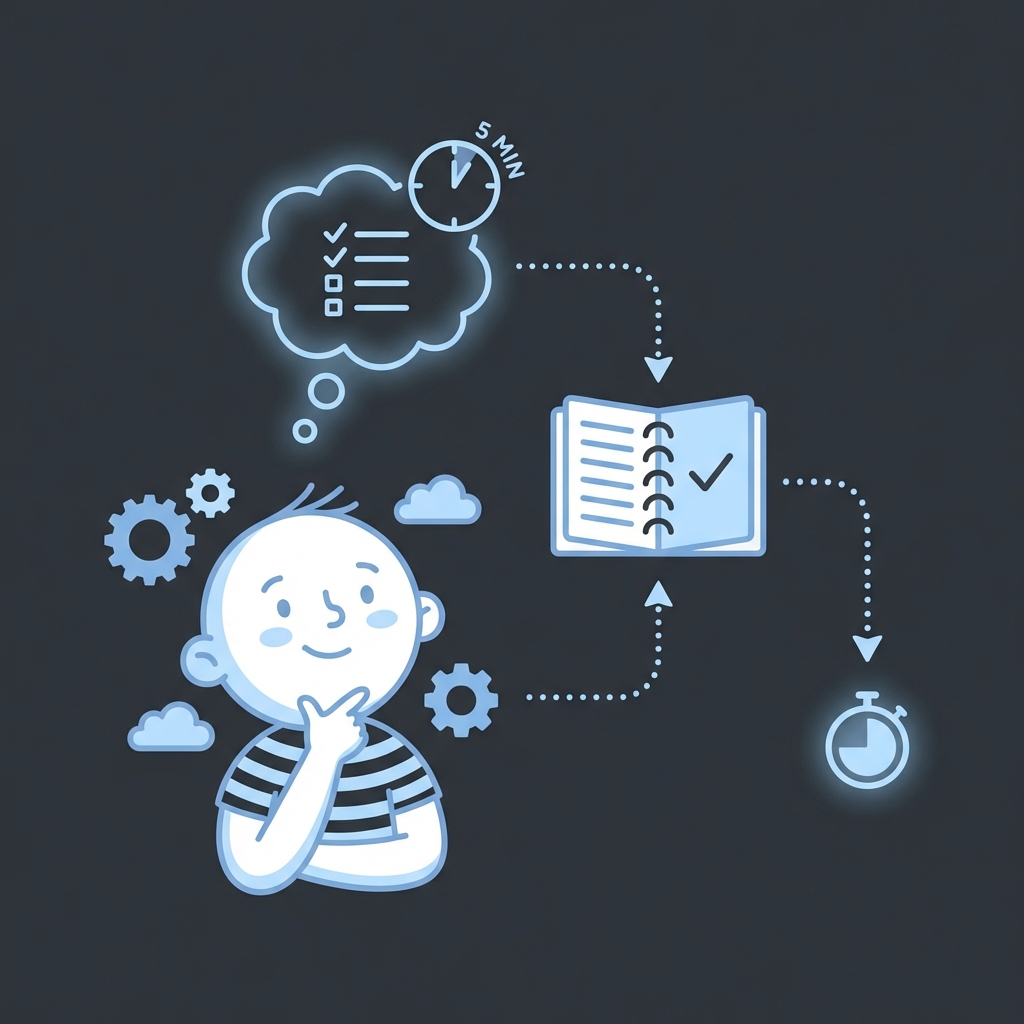
Right now, there are probably fifteen different things cycling through your mind. The dentist appointment you need to schedule. The project deadline that’s creeping closer. Your mom’s birthday next month. The weird noise your car is making. The friend who texted three days ago and you still haven’t responded.
Most productivity advice tells you to “get it all out of your head” by making lists and organizing systems. But that misses something crucial: before you can manage what’s in your head, you need to actually see it. Not judge it, not fix it, not optimize it—just see it.
The mental load inventory isn’t about becoming more efficient. It’s about becoming more aware of what you’re carrying, so you can make conscious choices about what stays and what goes.
The Goal: Visibility, Not Judgment
Traditional productivity culture treats mental clutter like a personal failing. You’re supposed to have everything organized, prioritized, and under control. The very phrase “getting your act together” implies that mental overwhelm is somehow your fault—a character flaw rather than a natural response to modern life.
But here’s what they don’t tell you: having a lot on your mind isn’t a productivity problem. It’s often a care problem. The things that occupy our mental space are usually things that matter to us—our work, our relationships, our health, our responsibilities to others.
The mental load isn’t evidence of poor organization. It’s evidence of how much you care.
This inventory starts from a different place. Instead of asking “How can I be more productive?” it asks “What am I holding right now?” The goal isn’t to eliminate everything on your mind—it’s to make conscious choices about what deserves your mental energy and what doesn’t.
Think of it like taking inventory at a store. You’re not judging whether you have too much stock or whether you’re a bad store manager. You’re simply counting what’s there so you can make informed decisions about what to order more of, what to put on sale, and what to discontinue.
Step 1: List Your Open Tabs
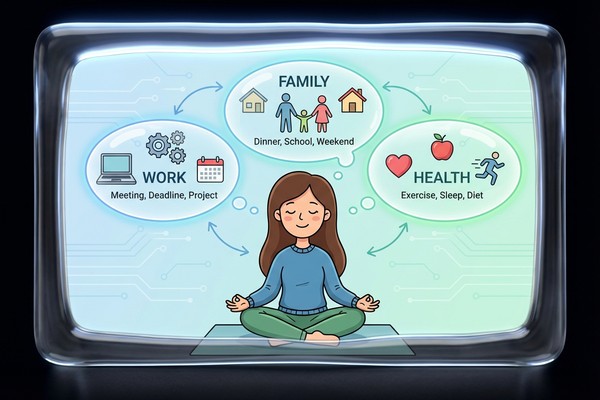
Grab a piece of paper or open a notes app. You’re going to do a gentle brain dump, but organized into four categories: Home, Work, Health, and Relationships.
Don’t overthink the categories. If something could fit in multiple places, just pick one. The goal isn’t perfect organization—it’s visibility.
Home: This includes household tasks, family logistics, financial stuff, home maintenance. Think: grocery lists, bills to pay, that leaky faucet, planning your kid’s birthday party, organizing the closet you’ve been meaning to tackle.
Work: Projects, deadlines, meetings, career development, side hustles. Include the big stuff and the small stuff: the presentation due Friday, the email you need to send, the networking event you’re considering, the course you want to take.
Health: Physical appointments, mental health check-ins, fitness goals, medical follow-ups. This might be scheduling your annual physical, following up on test results, that yoga class you want to try, or simply remembering to take your vitamins.
Relationships: Social obligations, family dynamics, friendships that need tending. Think: calling your sister back, planning dinner with friends, your partner’s work stress you’re worried about, the neighbor situation you need to address.
Spend about two minutes on this. Don’t aim for completeness—aim for honesty. What’s actually taking up space in your mind right now?
Step 2: Mark the Deadlines vs. the Dread
Now look at your list and mark each item with either a “D” for deadline or an “R” for dread.
Deadline items have external time pressure. Someone else is waiting, there’s a due date, there are consequences for delay. These are usually easier to spot: the work presentation, the doctor’s appointment, your taxes.
Dread items are the ones you avoid thinking about but can’t stop thinking about. They don’t have hard deadlines, but they create a low-level anxiety that follows you around. These might be having a difficult conversation, organizing your digital photos, dealing with that insurance claim, or decluttering the garage.
Here’s what most people discover: the dread items take up way more mental space than the deadline items, even though they seem less urgent.
Dread is a mental load multiplier. One avoided conversation can occupy more headspace than five actual deadlines.
The deadline items usually get done eventually because external pressure forces action. But the dread items? They become mental freeloaders—taking up valuable cognitive real estate without paying rent through resolution.
Step 3: Choose Your Next Action and Your “Let It Wait”
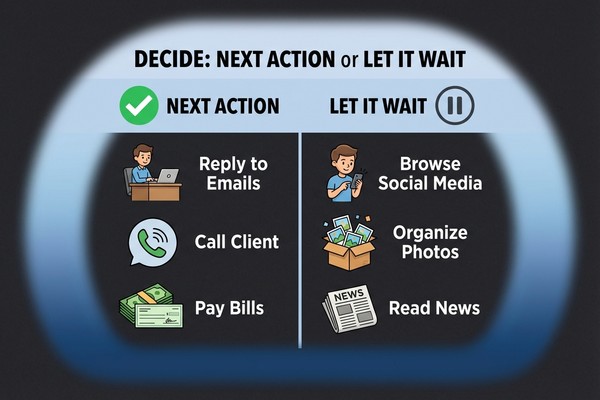
Look at your deadline items first. Pick one—just one—that you can take a concrete step on in the next few days. Not complete, just advance. Maybe it’s sending that email, making that phone call, or blocking time on your calendar.
Now look at your dread items. Here’s where it gets interesting. Instead of picking one to tackle (which is what productivity culture would tell you to do), pick one to consciously let wait.
This isn’t procrastination—it’s intentional delay. You’re making a conscious choice that this item doesn’t need your mental energy right now. Maybe it’s the garage organization project when you’re in the middle of a work crunch. Maybe it’s the difficult conversation with your friend when you’re already dealing with family stress.
Letting something wait on purpose feels completely different from avoiding it unconsciously. One creates relief; the other creates guilt.
Step 4: What Can Be Shared or Offloaded?
This is where most mental load inventories stop, but this is actually where the magic happens. Look at your list again and ask: What am I holding that doesn’t actually need to live in my head?
Some things can be delegated: asking your partner to handle the car maintenance, letting your teenager manage their own school project timeline, hiring someone to clean the house.
Some things can be shared: talking through your work stress with a colleague, asking friends for restaurant recommendations instead of researching alone, letting family members know about the scheduling conflict you’re trying to solve.
Some things can be systematized: setting up automatic bill pay, creating a shared family calendar, using a meal planning service.
And some things—this is crucial—can simply be acknowledged as not your job. The coworker who never responds to emails promptly. Your adult sibling’s financial decisions. The neighbor’s loud dog.
But here’s what’s different about this approach: you’re not offloading to become more productive. You’re offloading to create mental space for what actually matters to you.
What Your Load Says About Your Care
After you’ve gone through this inventory, take a moment to look at the whole picture. What patterns do you notice?
Maybe most of your mental load is about other people—their needs, their schedules, their problems. That says something beautiful about your capacity for care, but it might also reveal an imbalance.
Maybe you’re carrying a lot of “someday” items—the creative project, the career change, the home improvement. That suggests dreams that deserve more attention, not less mental energy.
Maybe you’re holding onto things that used to matter but don’t anymore—old commitments, outdated goals, relationships that have run their course.
Your mental load is a map of your values. The question isn’t whether you’re carrying too much—it’s whether you’re carrying the right things.
The inventory isn’t about judgment. It’s about alignment. Are the things taking up space in your mind the things you actually want to be thinking about?
A Place to Hold Your Tabs
If this inventory revealed more than you expected—and it usually does—you might want somewhere to hold these thoughts besides your head. Not to optimize them or turn them into a productivity system, but simply to give them a place to live outside your mind.
That’s exactly why we built Backlit. It’s not a task manager or a productivity app. It’s a place to put the things you need to remember so your brain doesn’t have to hold them anymore. You can log your tabs, set gentle reminders for the deadline items, and let the dread items sit there without judgment until you’re ready to address them.
The goal isn’t to become more efficient. It’s to become more intentional about what deserves your mental energy and what doesn’t. Because the truth is, you can’t manage what you can’t see. And you can’t choose what you’re not aware you’re carrying.
Your mental load isn’t a problem to solve. It’s information to use. What will you do with what you’ve learned?
This article was created with collaboration between humans and AI—we hope you ❤️ it.