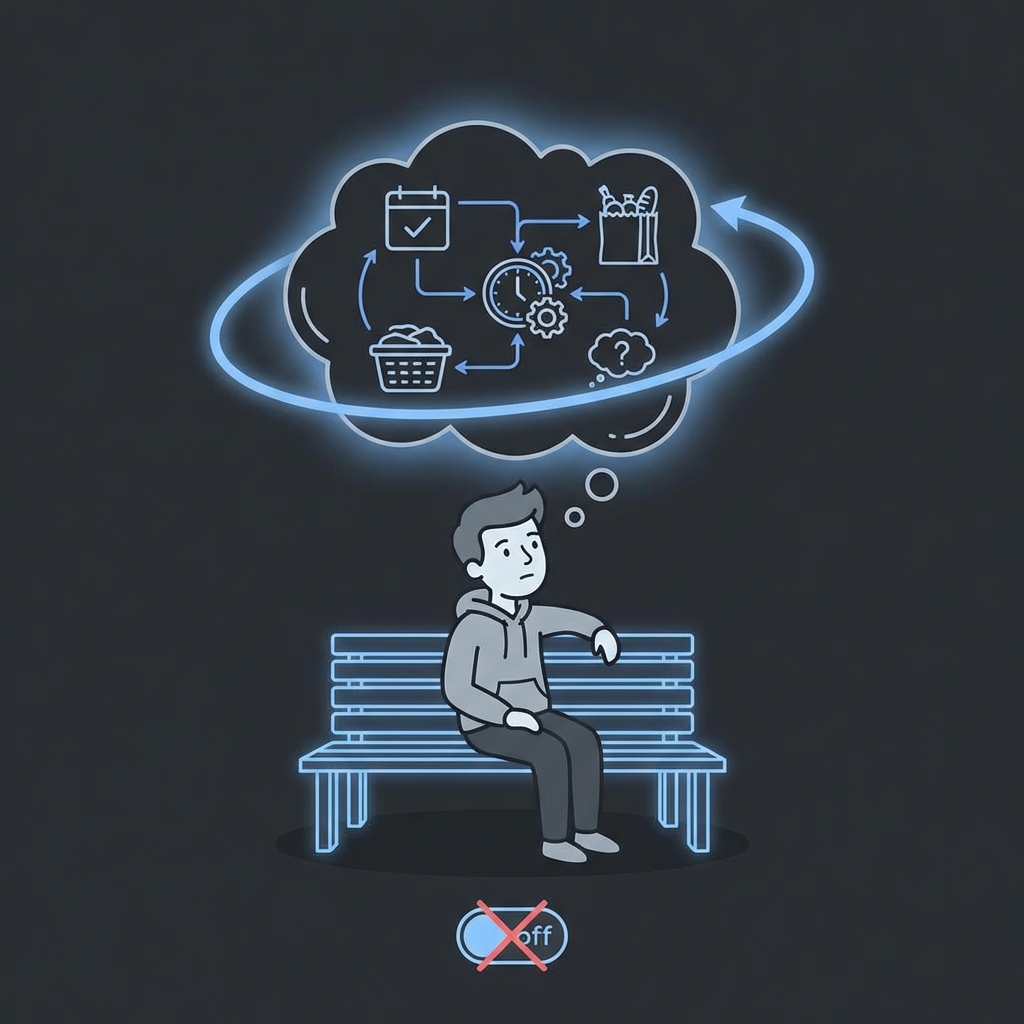
It’s Monday morning, and you’ve got a fresh cup of coffee, a clean workspace, and that familiar surge of optimism that whispers this week will be different. You’ve cleared your calendar for the first hour, opened a new notebook, maybe even lit a candle. Everything feels possible.
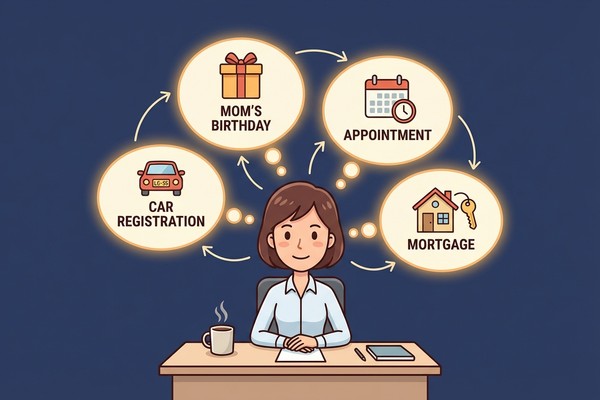
Except for the low hum of anxiety that never quite goes away. The mental reminder that your mom’s birthday is next week and you haven’t ordered a gift. The nagging awareness that the car registration is due sometime soon—was it this month or next? The background calculation of whether there’s enough in the checking account for the mortgage payment, and oh right, didn’t someone mention needing to schedule that follow-up appointment?
Fresh starts are supposed to feel… fresh. But if you’re the person who holds the invisible threads that keep life from unraveling, that Monday morning optimism crashes into a wall of persistent cognitive work that doesn’t care about your new planner or your good intentions.
The Work That Never Clocks Out
Mental load isn’t just about having a lot to do. It’s the cognitive work of holding context—maintaining awareness of what needs to happen, when, and how all the pieces connect. It’s anticipating what others will need before they ask. It’s being the repository for information that no one else is tracking, the coordinator for logistics that affect multiple people, the backup system for everything that might fall through the cracks.
This kind of work doesn’t pause for weekends, vacations, or fresh starts. While you’re trying to focus on that important project, part of your brain is still running calculations: Did I respond to that email from the school? When does the dog need his shots? Should I text my sister about Thanksgiving plans now or wait until after her work presentation?
The cruelest part? Most of this work is invisible to others, which means it’s often invisible to productivity systems too. Your task manager might capture “buy birthday gift,” but it doesn’t hold the emotional labor of remembering that your mom prefers experiences to things, or the coordination required to check with your siblings about a joint celebration, or the anticipatory worry about whether she’ll actually like whatever you choose.
Why the Load Doesn’t Lift
There’s a particular kind of exhaustion that comes from carrying mental load, and it stems from the fact that this work is fundamentally different from other kinds of tasks. You can finish a project, complete a workout, or clean a room. But you can’t really finish being the person who remembers things.
The work persists because it’s built into the structure of how we live. Someone has to notice when the milk is running low. Someone has to remember that the babysitter needs to be paid. Someone has to track the complex web of everyone’s schedules and preferences and needs. In most households, that someone is one person—and once you become that person, the role rarely gets redistributed.
This is why “fresh start” thinking often backfires for people carrying significant mental load. The advice assumes your cognitive burden is a result of poor organization or lack of discipline. Get a better system! Try a new app! Batch your tasks! But these solutions miss the point entirely. The problem isn’t that you’re disorganized. The problem is that you’re holding too much.
The mental load doesn’t lift because someone has to be the keeper of the invisible work.
Consider the seemingly simple task of “planning dinner.” For someone not carrying mental load, this might mean deciding what to eat tonight. For someone who is, it means maintaining awareness of what’s in the fridge, what’s about to expire, who has dietary restrictions, what everyone actually likes to eat, whether there are any schedule conflicts that would affect timing, and whether you have the energy to cook or need to figure out an alternative. Oh, and also grocery shopping, meal prep, and cleanup. And tomorrow you get to do it again.
The Shame of the Unnamed
One of the most insidious aspects of mental load is how it breeds shame when it goes unrecognized. You feel like you should be able to handle everything you’re handling, plus more. You compare yourself to people who seem to effortlessly manage their lives, not realizing that they might not be managing nearly as much as you are.
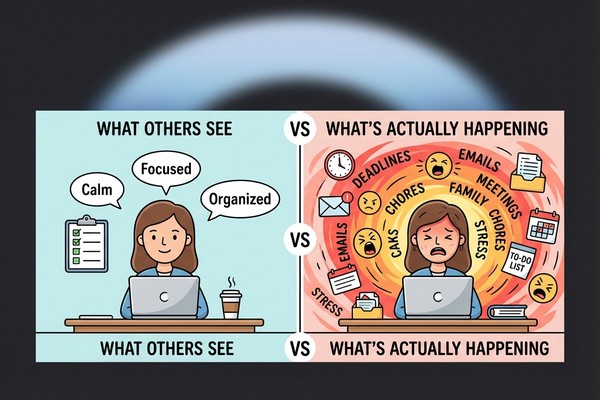
When the work is invisible, the struggle becomes invisible too. You end up feeling like you’re failing at something that shouldn’t be that hard, rather than recognizing that you’re successfully managing a complex system that would overwhelm most people.
This shame gets amplified by productivity culture, which treats mental overwhelm as a personal failing rather than a structural problem. The message is clear: if you can’t handle your mental load, you need better systems, more discipline, stronger boundaries. The possibility that you might simply be carrying too much for one person to reasonably manage rarely enters the conversation.
A Different Framework
What if we stopped treating mental load as a personal productivity challenge and started recognizing it as a form of unpaid labor that deserves acknowledgment and support?
You’re not behind on life. You’re not failing at adulting. You’re not lacking in organizational skills or willpower. You are successfully managing a cognitive workload that is genuinely demanding and that most systems are not designed to support.
The relief you’re seeking isn’t going to come from finding the perfect planner or developing better habits. It’s going to come from reducing the actual load you’re carrying—either by redistributing some of the work or by getting support that actually takes things off your mental plate rather than just helping you organize them better.
This reframe matters because it shifts the focus from fixing yourself to fixing the situation. Instead of asking “How can I get better at managing all of this?” the question becomes “How can I carry less of this?”
The Experiment: Naming What You’re Holding
Here’s something worth trying, not as a productivity hack but as an act of recognition: spend five minutes writing down the mental tabs you’re currently holding open.
Not your to-do list—your mental load. The things you’re aware of, tracking, anticipating, or coordinating. The birthdays you’re remembering, the appointments you’re mentally scheduling, the conversations you need to have, the decisions that are waiting for your input.
Write them down not to organize them or prioritize them, but simply to see them. To acknowledge the cognitive work you’re doing. To recognize that this invisible labor is real work that takes real energy.
You might be surprised by how long the list gets. You might feel some relief just seeing it all in one place instead of scattered across your consciousness. You might realize why that fresh start feeling never quite sticks—because you’re not actually starting fresh. You’re starting with a full cognitive load that no one else can see.
The first step toward reducing mental load is recognizing how much you’re actually carrying.
Beyond Individual Solutions
The honest truth is that mental load is often a systemic problem that requires systemic solutions. One person optimizing their productivity will never fix a household where one person holds all the invisible work. One parent getting better at time management won’t solve the fundamental imbalance of who remembers what needs to happen for the family to function.
But recognition is still the starting point. When you can see the work you’re doing, you can begin to make different choices about it. You can start conversations about redistribution. You can seek support that actually reduces your load rather than just helping you manage it more efficiently.
You can also stop feeling like you’re failing when you can’t perfectly balance everything you’re carrying. The mental load doesn’t take days off because the work itself doesn’t pause. Recognizing that isn’t pessimistic—it’s realistic. And from that realistic starting point, you can begin to imagine what actual relief might look like.
The fresh start you’re looking for isn’t about getting better at carrying everything. It’s about carrying less. And that’s a very different kind of fresh start—one that requires support, not just willpower.
---
If this resonates, you’re not alone in feeling like you’re holding too much. We’re building Backlit to help reduce mental load by actually taking things off your plate, not just organizing them better. Join our waitlist to be notified when we launch, and try our starter app to begin logging the tabs you’re holding right now.
This article was created with collaboration between humans and AI—we hope you ❤️ it.