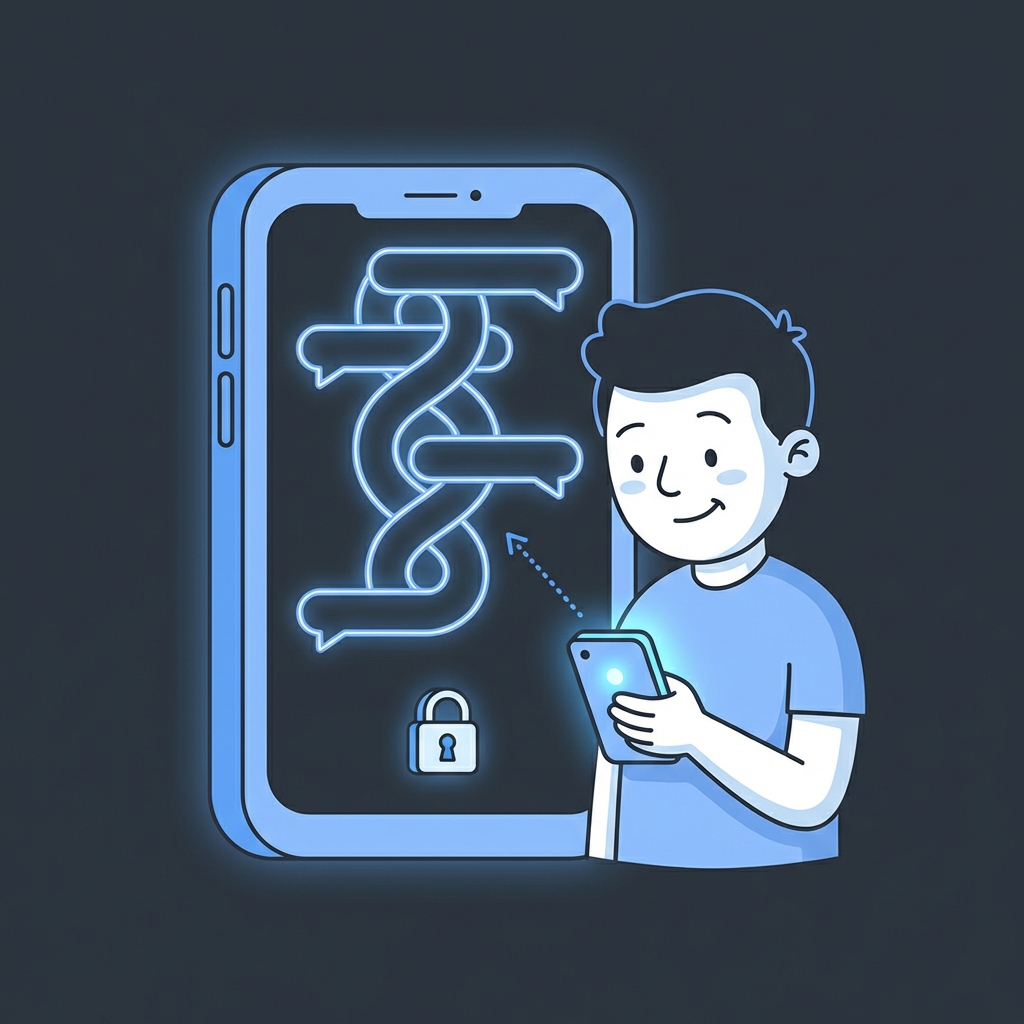
There it is, sitting in your messages like an unfinished conversation at 2 AM. The thread that started three days ago about Saturday’s plans, meandered through childcare logistics, touched on your mom’s birthday, and somehow landed on whether you’re “okay” after that comment you made about being tired.
Your thumb hovers over the keyboard. You’ve opened this chat seventeen times today, each time crafting a response in your head, then closing it because the moment doesn’t feel right, or you don’t have the emotional bandwidth, or you’re not sure what tone to strike. The little notification dot mocks you from your home screen.
This isn’t about forgetting to reply. This is about the invisible weight of an open loop that lives not in your task list, but in the space between two people.
The Thread That Never Ends
Let me paint you a picture. It’s Tuesday morning, and Sarah texts her sister about weekend plans. “Kids want to see you Saturday - are you free?”
By Tuesday evening, the thread has evolved:
- Sister can do Saturday afternoon, not morning
- But Sarah’s daughter has soccer at 2 PM now (schedule changed)
- Maybe Sunday instead?
- Sister mentions she’s been stressed about work
- Sarah asks if she’s okay
- Sister says “yeah just tired”
- Sarah wants to follow up but doesn’t want to pry
- The conversation sits, unresolved, in both their phones
What looks like a simple scheduling conversation has become an emotional minefield. Sarah finds herself thinking about it while making dinner, wondering if her sister is really okay, whether she should push for Sunday or suggest a different weekend entirely, and if that “just tired” was code for something bigger.
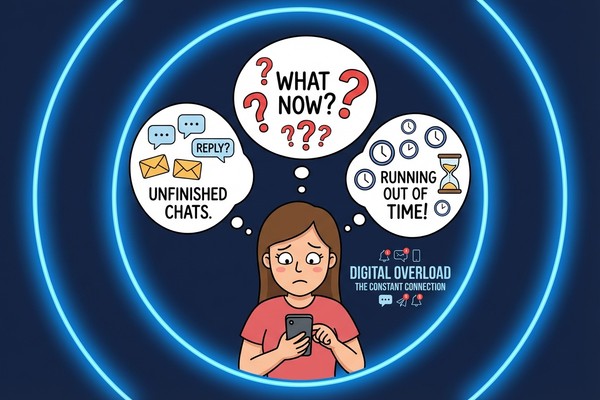
The thread isn’t just about Saturday anymore. It’s carrying the weight of sisterly concern, family coordination, changed schedules, and the delicate dance of emotional availability. And it’s sitting there, open, in Sarah’s mental browser with about fifteen other tabs.
The Hidden Labor of Reading Between Lines
Here’s what productivity culture doesn’t tell you: the hardest part isn’t managing your own tasks. It’s managing the emotional and logistical complexity of coordinating with other humans who have their own inner lives, schedules, and ways of communicating.
When someone says “maybe Sunday instead?” they’re not just suggesting an alternative. They’re opening a negotiation that requires you to check your own Sunday availability, consider whether Sunday works better for everyone involved, read the subtext of why Saturday became complicated, gauge their enthusiasm level, decide whether to address the “I’m stressed” comment now or later, and wonder if you’re being too pushy or not supportive enough.
The mental load isn’t just remembering what needs to happen—it’s holding space for all the things that might need to happen, depending on how other people feel.
This is cognitive work that doesn’t show up in any productivity system. You can’t time-block “worry about whether sister is okay” or add “decode the emotional subtext of scheduling messages” to your task manager. But your brain is doing this work anyway, in the background, while you’re trying to focus on everything else.
The Anxiety of the Unclosed Loop
There’s a particular kind of low-grade stress that comes from unresolved conversations. It’s different from the stress of a looming deadline or an overflowing inbox. It’s more personal, more relational, and somehow harder to shake.
Psychologists call these “open loops”—unfinished business that your brain keeps cycling back to. But when the open loop involves another person’s emotions, schedule, and needs, it becomes exponentially more complex. You’re not just holding your own incomplete task; you’re holding space for someone else’s uncertainty, availability, and feelings.
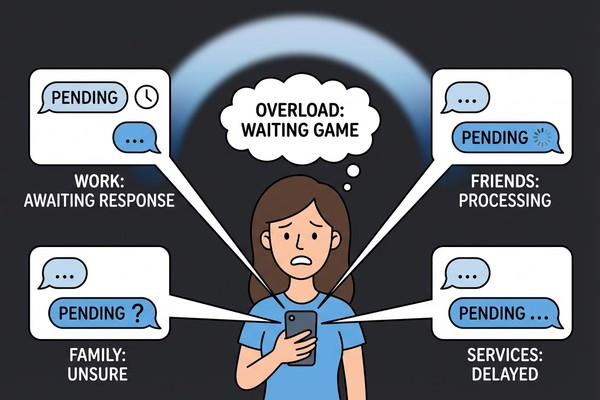
The worst part? These threads often stay open not because they’re complicated to resolve, but because closing them requires emotional labor at a moment when both people have the bandwidth for it. And finding that moment—when you’re both free, both in the right headspace, both ready to make decisions—can feel impossible.
So the thread sits there. And sits there. And every time you see their name in your messages, you feel that little ping of “oh right, we never figured out Saturday.”
The Default Closer Problem
In most relationships, someone becomes the default closer of open loops. They’re the one who circles back, who says “hey, what did we decide about Saturday?” three days later, who takes responsibility for making sure conversations reach resolution.
This role usually falls to whoever has been socialized to prioritize relationship harmony and logistics coordination. In families, it’s often the mom. In friend groups, it’s the planner. In work relationships, it’s whoever feels most responsible for outcomes.
But being the default closer is exhausting. It means your brain becomes the backup drive for everyone else’s unfinished conversations. It means you’re not just managing your own open loops—you’re managing theirs too.
Scripts for Gentle Closure
The good news is that most people want these loops closed too. They’re just as tired of the mental ping-pong as you are. Sometimes all it takes is someone being willing to name the loop and suggest closure.
Here are some gentle ways to close common open threads.
Here are some gentle ways to close common open threads.
“I want to nail down Saturday so we can both stop thinking about it. Does 3 PM work, or should we try for next weekend?” Or “I know we left this hanging—no pressure, but I’d love to know what you’re thinking so I can plan accordingly.” Or “This has been on my mind and I imagine yours too. Can we make a quick decision so we both have one less thing to track?”
The key is acknowledging that the open loop exists and affects both of you. Most people feel relief when someone names the thing they’ve both been carrying around mentally.
What Systems Miss
Traditional task management assumes that everything important can be captured as a discrete action item with a clear owner. But so much of our mental load lives in the spaces between—in the ongoing coordination, the emotional attunement, the reading between lines.
Your task manager can remind you to “text Sarah about Saturday,” but it can’t hold the complexity of what that text thread becomes. It can’t track that your sister seemed stressed, or remind you to follow up on her emotional state in a few days, or help you navigate the delicate balance between being supportive and being intrusive.
Most productivity systems are designed for a world where tasks have clear boundaries and single owners. But real life is messier, more relational, and infinitely more nuanced.
This is why so many people feel like their systems are failing them, even when they’re technically “organized.” The systems handle the easy stuff—the concrete tasks with clear deadlines. But they leave you to carry all the relational complexity, the emotional labor, and the open loops that don’t fit neatly into categories.
Holding Space for Human Complexity
What if there was a way to externalize not just your tasks, but your open loops? Not just your deadlines, but your ongoing concerns about people you care about?
Imagine a system that could hold the context of that thread with your sister—remembering that Saturday plans are still unresolved, that she mentioned work stress, that you want to check in but not overwhelm her. A system that could remind you to follow up, but with the nuance of timing and emotional intelligence that these situations require.
This isn’t about optimizing human relationships or turning emotional labor into productivity hacks. It’s about recognizing that so much of our mental load lives in the ongoing work of caring for and coordinating with other people—and that work deserves support too.
The text thread you can’t close isn’t a personal failing or a sign that you need better boundaries. It’s evidence that you’re human, that you care about people, and that relationships require ongoing attention and emotional labor.
Maybe the goal isn’t to close every loop immediately, but to have systems that can hold them with the same care and complexity that they hold in your mind. Systems that understand that some of our most important work happens in the spaces between tasks, in the ongoing dance of human connection and care.
Until then, that thread will keep sitting there, carrying more weight than any task list could ever capture.
This article was created with collaboration between humans and AI—we hope you ❤️ it.