
You know that feeling when you’re running late for a meeting, your phone is buzzing with notifications, and suddenly you can’t find your keys anywhere? Your entire world narrows to that single, urgent problem. The important presentation you need to review? Forgotten. The thank-you note you’ve been meaning to send? Gone from your mind entirely. The dentist appointment you should schedule? Might as well not exist.
This isn’t a character flaw or a sign you need better time management skills. It’s your brain operating under scarcity—and it changes everything about how you think, decide, and act.
When time feels scarce, our cognitive machinery shifts into survival mode. Psychologists call this “tunneling”—our attention becomes laser-focused on immediate threats while everything else fades into the background. It’s the same mechanism that helped our ancestors survive genuine emergencies, but in our modern world of packed calendars and endless demands, it’s working against us every single day.
When Everything Feels Like a Fire Drill
Scarcity mindset doesn’t just happen when you’re objectively busy. It kicks in when you feel like there’s not enough time, which can happen even on relatively light days if your mental load is heavy. Maybe you have three meetings, but you’re also tracking a sick kid’s symptoms, remembering to follow up on insurance claims, and mentally rehearsing a difficult conversation with your boss.
The cruel irony is that scarcity mindset makes us less effective, not more. When everything feels urgent, our brains start making predictable mistakes. We grab the first solution instead of the best one. We say yes to requests we should decline. We forget to eat lunch, then crash at 3 PM and make even worse decisions.
I watched this play out with a friend who was drowning in work deadlines. She kept staying late to “catch up,” but the late nights made her foggy the next day, which led to more mistakes, which created more urgent fixes, which kept her there even later. She was stuck in a scarcity loop—the very behaviors meant to solve her time problem were making it worse.
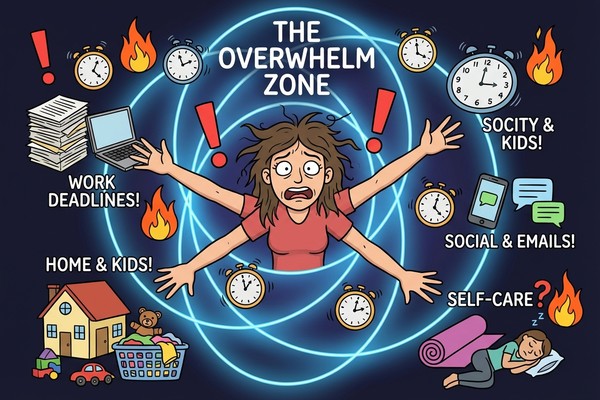
When everything feels urgent, nothing gets the attention it actually deserves.
The most insidious part of scarcity mindset is how it distorts our priorities. Important but non-urgent tasks—the ones that actually move our lives forward—get pushed aside for whatever’s screaming loudest. Preventive care gets delayed. Relationship maintenance gets skipped. System improvements get postponed indefinitely.
The Tunneling Trap
Tunneling explains why smart, capable people make seemingly obvious mistakes when they’re overwhelmed. Your brain isn’t broken—it’s doing exactly what evolution designed it to do. When resources feel scarce, attention narrows to focus on immediate threats. This served us well when scarcity meant genuine life-or-death situations, but it’s poorly suited for the chronic, low-grade scarcity of modern life.
Think about the last time you were rushing to get out the door. Did you remember to grab your water bottle? Probably not. Did you double-check that you locked the door? Maybe, maybe not. Your tunneled attention was focused on not being late, so everything else became invisible.
This tunneling effect compounds over time. When you’re constantly putting out fires, you never get to work on fire prevention. The roof leak that needs a simple repair becomes a major renovation project. The slightly strained relationship becomes a serious conflict. The small organizational system that could save hours each week never gets implemented because you’re too busy dealing with the chaos that system would prevent.
The maintenance work that keeps life running smoothly—updating passwords, organizing files, having check-in conversations with family members—feels optional when you’re in scarcity mode. But this work isn’t optional. It’s invisible until it breaks, and then it becomes the most urgent thing in your world.
The Hidden Cost of Constant Urgency
Here’s what productivity culture gets wrong: it treats urgency as a motivator instead of recognizing it as a warning sign. The advice to “embrace the hustle” or “thrive under pressure” ignores the cognitive cost of operating in scarcity mode.
When your brain is constantly scanning for threats and managing urgent demands, it burns through mental resources at an unsustainable rate. You might get through your immediate to-do list, but you’re depleting the very capacity you need for thoughtful decision-making, creative problem-solving, and long-term planning.
I’ve noticed this in my own life during particularly intense work periods. I can handle the urgent stuff—responding to emails, meeting deadlines, putting out fires—but I lose the ability to think strategically. I stop noticing patterns. I miss opportunities for improvement. I become reactive instead of proactive, which just creates more urgency down the line.
The research backs this up. Studies show that people experiencing scarcity perform worse on cognitive tasks, make more impulsive decisions, and have reduced self-control. It’s not that they’re less intelligent or capable—their cognitive resources are simply being consumed by the constant vigilance that scarcity demands.
Why Maintenance Always Loses
One of the clearest signs of scarcity mindset is how maintenance work gets deprioritized. I’m not just talking about changing the oil in your car (though that counts too). I mean all the invisible work that keeps systems running smoothly: updating your budget, organizing your digital files, having regular check-ins with your team, scheduling preventive healthcare, maintaining relationships with extended family.
This work feels optional because the consequences aren’t immediate. Missing one budget review won’t cause a crisis. Skipping one team check-in won’t derail a project. But skip enough of these maintenance tasks, and you’ll find yourself dealing with much bigger, more urgent problems later.
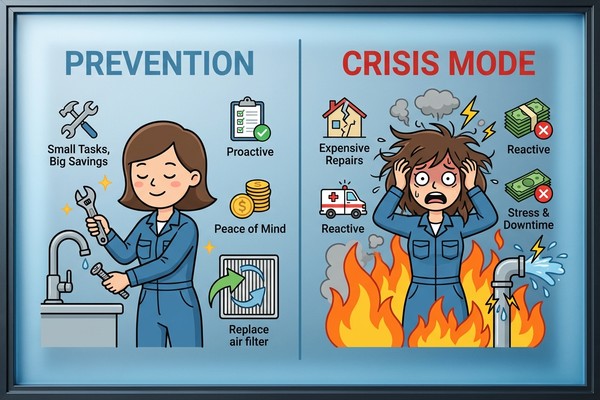
The problem is that maintenance work requires exactly the kind of spacious, forward-thinking attention that scarcity mindset destroys. When you’re tunneled on immediate demands, it’s almost impossible to invest time in preventing future problems. You’re too busy dealing with the problems that could have been prevented if you’d had the bandwidth to do maintenance work six months ago.
The proof is in what didn’t happen—the crisis that never materialized because someone did the invisible work of prevention.
This creates a vicious cycle. Skipping maintenance leads to more crises, which creates more scarcity, which makes maintenance feel even more impossible. Breaking this cycle requires recognizing that maintenance isn’t optional—it’s essential infrastructure for a sustainable life.
Creating Space in a Scarce World
The solution isn’t to simply “manage your time better” or “be more productive.” It’s to address scarcity itself by creating genuine buffers and reducing the number of things you’re trying to hold in your head simultaneously.
Real relief comes from three key strategies:
Building in buffers — this means padding your schedule, keeping some savings in reserve, and having backup plans. Buffers aren’t inefficiency, they’re insurance against the tunneling effects of scarcity.
Offloading mental work, whether it’s to systems, tools, or other people. Getting things out of your head reduces the cognitive load that triggers scarcity mindset.
Closing open loops. Every unfinished task, unmade decision, or unresolved issue consumes mental bandwidth. The fewer open loops you’re tracking, the more capacity you have for thoughtful decision-making.
The goal isn’t to eliminate all urgency from your life—some things genuinely are urgent. The goal is to create enough space that you can distinguish between real urgency and manufactured urgency, between fires that need immediate attention and maintenance work that prevents fires from starting.
The Recurring Fire Question
Here’s a question worth asking yourself: What’s the fire that keeps recurring in your life? The same type of crisis that pops up every few months, the problem you keep having to solve over and over again?
Maybe it’s the scramble to find childcare when your regular arrangements fall through. Maybe it’s the monthly panic when bills are due and you haven’t tracked spending. Maybe it’s the relationship conflicts that flare up because important conversations keep getting postponed.
These recurring fires are usually symptoms of skipped maintenance. The childcare crisis points to a need for backup systems. The bill panic suggests a need for better financial tracking. The relationship conflicts indicate a need for regular check-ins and communication.
When you’re in scarcity mode, these patterns become invisible. You’re too focused on fighting the current fire to notice that it’s the same fire you fought last month and will likely fight again next month. Breaking free requires stepping back far enough to see the pattern—and then investing in the prevention work that feels impossible when everything is urgent.
The most effective systems aren’t the ones that help you do more faster. They’re the ones that help you hold less, remember less, and worry less. They’re the ones that turn recurring crises into non-events, that make maintenance automatic, that create enough space for your brain to operate in abundance instead of scarcity.
Because here’s the truth that productivity culture won’t tell you: the goal isn’t to thrive under pressure. The goal is to create a life where pressure is the exception, not the rule.
This article was created with collaboration between humans and AI—we hope you ❤️ it.