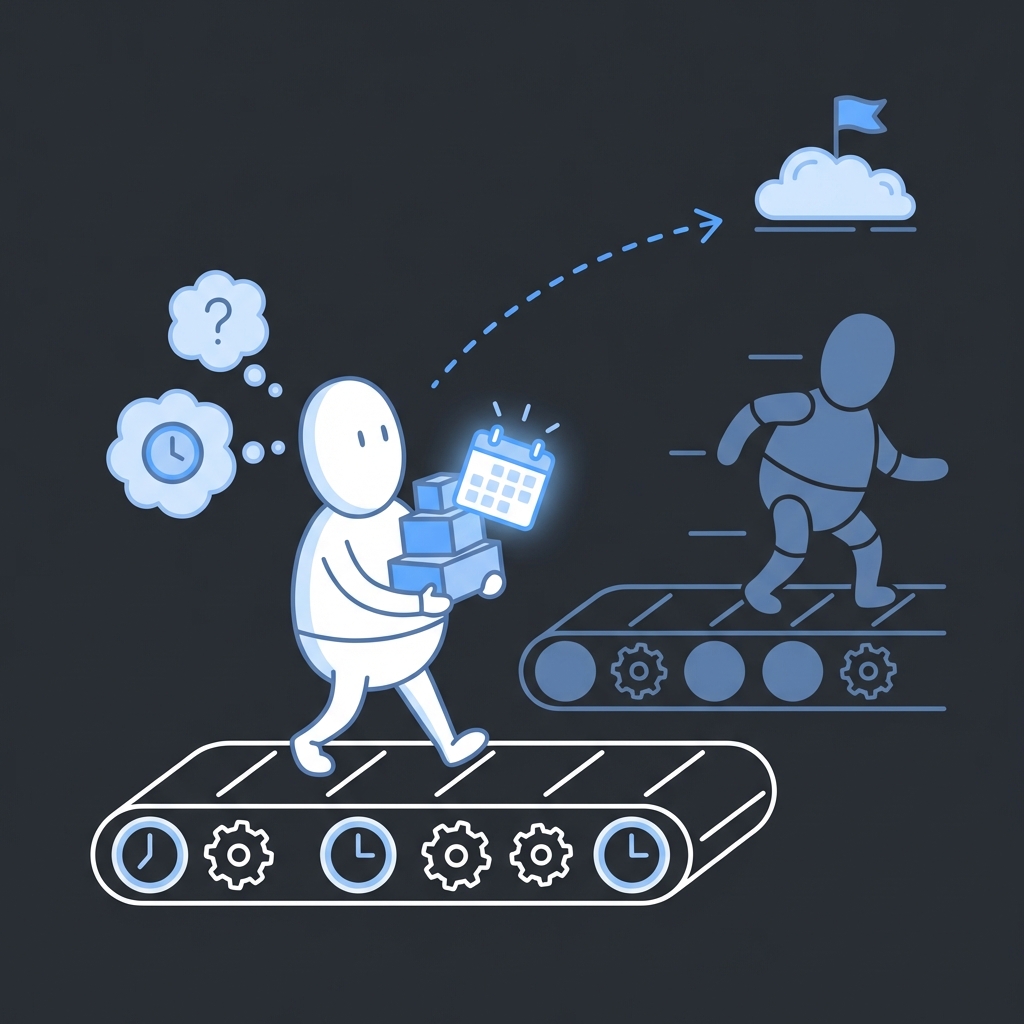
You’re doing everything. The laundry gets folded, the emails get answered, the deadlines get met. Your calendar is color-coded, your to-do list is updated, and from the outside, you look like someone who has their life together. So why does it feel like you’re constantly drowning? Why does every small task feel monumental, every decision exhausting, every interruption like the last straw?
The answer isn’t that you’re lazy, disorganized, or lacking willpower. You’re experiencing cognitive overload—a state where your brain’s processing capacity is maxed out, leaving you feeling perpetually behind even when you’re technically keeping up.
Understanding this distinction matters because cognitive overload masquerades as personal failure. It whispers that if you just tried harder, organized better, or cared more, everything would click into place. But cognitive overload isn’t a character flaw you can willpower your way out of. It’s a capacity issue, and treating it like a motivation problem only makes it worse.
The Hidden Mechanics of Mental Traffic Jams
Think of your working memory as a small desk in a busy office. This desk can only hold so many items at once—typically between four and seven pieces of information that need active attention. Now imagine that every commitment, every unfinished task, every decision you haven’t made yet is a folder that needs to stay on this desk until it’s resolved.
The birthday party you need to plan. The weird noise your car is making. The project deadline next week. Your mom’s doctor’s appointment. The grocery list you keep forgetting to write. The friend you haven’t texted back. Each one takes up precious desk space, and unlike a physical desk, you can’t just stack them higher.
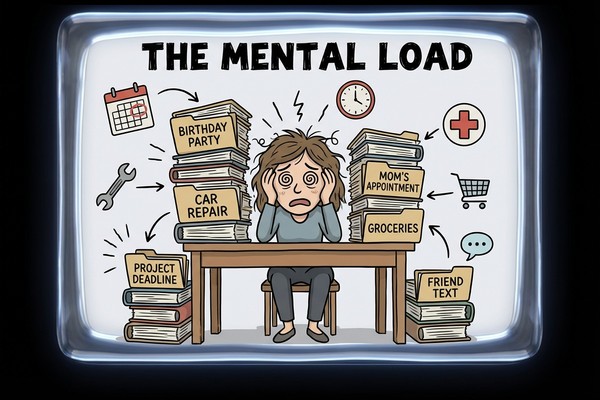
When your mental desk overflows, something fascinating and frustrating happens. Your brain doesn’t crash like an overloaded computer—it keeps running, but everything becomes harder. Simple decisions feel overwhelming because there’s no processing power left. You forget obvious things because your working memory is already full. You avoid starting new tasks because you instinctively know there’s no room for them.
The proof isn’t in what you’re not doing—it’s in how exhausting it feels to do what you are doing.
This is why “just push through it” advice falls flat. You can’t think your way out of a traffic jam by pressing harder on the gas pedal. When cognitive resources are maxed out, more effort often backfires, creating additional stress that takes up even more mental space.
The Symptoms Nobody Talks About
Cognitive overload doesn’t announce itself with dramatic breakdowns. Instead, it shows up in subtle ways that are easy to dismiss or blame on other things. You might find yourself snapping at people over minor inconveniences—not because you’re mean, but because your patience reserves are already depleted managing everything else. You forget appointments you’ve had for weeks, not because they’re unimportant, but because your brain has no spare capacity for routine recall.
There’s also the peculiar phenomenon of task avoidance that looks like procrastination but feels different. You know exactly what needs to be done, you have the time to do it, but starting feels impossible. This isn’t laziness—it’s your brain’s protective mechanism recognizing that adding one more active task to an already overloaded system might cause everything to collapse.
The physical symptoms are real too. Cognitive overload manifests as fatigue that sleep doesn’t fix, headaches that come from nowhere, and a general sense of being wound too tight. Your body is working overtime to manage a system running at capacity, and that takes energy.
Why Overload Stays Hidden
The insidious thing about cognitive overload is that it’s largely invisible, both to others and sometimes to yourself. You’re still functioning. You’re still showing up. From the outside, you might even look more productive than usual because you’re in constant motion, trying to stay ahead of the mental pile-up.
This invisibility makes it easy to gaslight yourself. “I’m getting things done, so what’s my problem?” But functioning isn’t the same as thriving. You can be drowning in three feet of water—technically managing, but not okay.
The culture around us doesn’t help. We celebrate busy as a badge of honor and treat mental load as something that should be effortlessly managed alongside everything else. There’s an expectation that adults should be able to hold infinite complexity in their heads without breaking stride. This cultural narrative makes cognitive overload feel like a personal failing rather than a predictable response to an overloaded system.
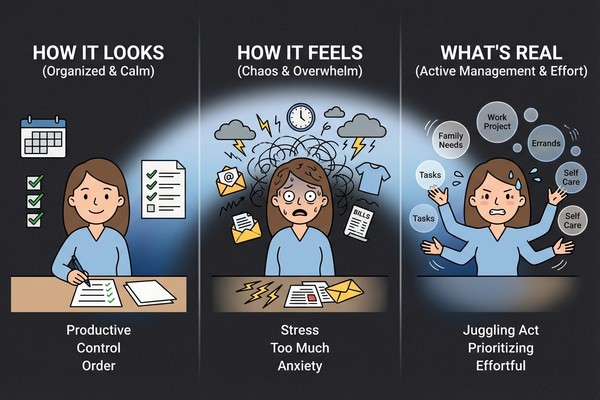
Women, particularly mothers, face an additional layer of invisibility around cognitive overload. The mental labor of family management—remembering everyone’s schedules, anticipating needs, coordinating logistics—is often unrecognized work. Society expects this cognitive load to be carried seamlessly, as if remembering and planning and anticipating don’t require actual mental resources.
Finding the Relief Levers
The good news is that cognitive overload responds well to strategic intervention. Unlike motivation or character issues, it’s a mechanical problem with mechanical solutions. The key is working with your brain’s limitations rather than against them.
The most effective relief comes from reducing the number of active items competing for mental space. This doesn’t necessarily mean doing less—it means changing how tasks exist in your mental ecosystem. Instead of keeping everything active in working memory, you can externalize, systematize, or share the cognitive burden.
The goal isn’t to remember better—it’s to need to remember less.
Externalizing means getting things out of your head and into trusted systems. But here’s where most advice goes wrong: it’s not enough to write things down if you still have to remember to check your list. True externalization means creating systems that surface information when you need it, not when you remember to look for it.
Sharing cognitive load means distributing the mental work across people or systems. If you’re the family’s human calendar, that’s cognitive load you’re carrying alone. If you’re the only one who remembers when bills are due, that’s mental space being occupied 24/7. Sometimes the most powerful intervention is teaching others to hold their own cognitive load or finding systems that can hold it for everyone.
The relief also comes from recognizing that not everything needs to be actively managed all the time. Some tasks can exist in a “someday” state without taking up precious working memory. The key is having trusted systems that ensure these items resurface when they become relevant, so your brain can truly let go of them.
A Quick Reality Check
Sometimes it helps to step back and honestly assess whether you’re dealing with cognitive overload or just a busy period. Here are the telling signs:
• You feel tired even after adequate sleep
• Small interruptions trigger disproportionate irritation
• You avoid starting tasks you know how to do
• You forget things that are normally automatic
• Decision-making feels unusually difficult
• You have a persistent sense of being behind despite staying current
If several of these resonate, you’re likely dealing with overload, not a character deficiency. This recognition alone can be liberating—it shifts the problem from “what’s wrong with me” to “what’s overwhelming my system.”
Designing Around Human Limits
The broader lesson here is about designing life systems that work with human cognitive architecture rather than against it. Most productivity advice assumes unlimited mental capacity and treats cognitive load as an afterthought. But cognitive load isn’t optional overhead—it’s the real cost of complexity.
This means being intentional about what you ask your brain to hold. It means recognizing that every commitment, every unfinished task, every decision deferred is taking up mental real estate. And it means building systems that can carry some of that load so you don’t have to.
The relief you feel when you finally externalize something that’s been taking up mental space—that moment when you can actually stop thinking about it—reveals how much energy was being consumed by the simple act of remembering. Multiply that feeling by the dozens of things competing for your attention, and you start to understand why everything feels so hard.
You’re not behind because you’re not doing enough. You’re behind because you’re trying to hold too much.
The path forward isn’t about becoming a better human processor. It’s about becoming better at recognizing when you’re approaching capacity and having strategies to redistribute the load before everything feels impossible. Because feeling behind when you’re doing everything isn’t a sign that you need to do more—it’s a sign that you need to hold less.
This article was created with collaboration between humans and AI—we hope you ❤️ it.