You know that feeling when someone asks “How are you?” and you pause, genuinely unsure how to answer? Not because you’re being polite, but because you honestly don’t know. Life feels like it’s moving so fast that you’ve lost track of which parts are working and which parts are quietly falling apart.
Most of us live in reactive mode, putting out fires as they flare up. We notice our health when we get sick, our relationships when there’s conflict, our finances when something breaks. But what if there was a way to see your whole life at once—not to optimize it into some impossible standard, but simply to notice where you’re supported and where you’re white-knuckling it alone?
The Wheel That Doesn’t Judge
The life areas wheel isn’t new. You’ve probably seen versions of it in self-help books or corporate wellness programs, usually accompanied by pressure to achieve perfect balance across all domains. But here’s the thing: perfect balance is a myth that serves no one except the people selling you solutions.
Instead, think of this wheel as a gentle scan of your life’s terrain. It’s like taking a moment to look around and notice what’s actually happening, rather than what you think should be happening or what everyone else seems to have figured out.
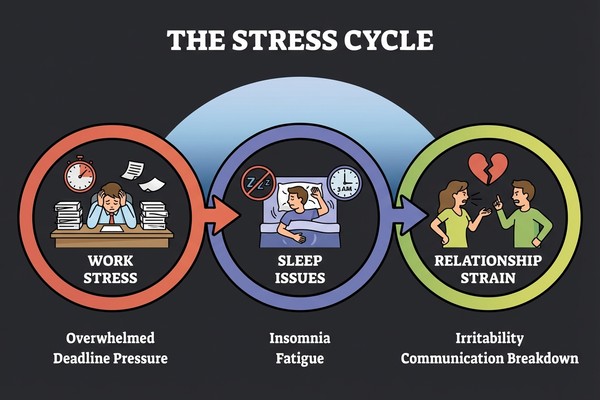
The traditional approach treats each life area as a separate optimization project. Rate your career satisfaction! Improve your fitness score! Level up your relationships! But life doesn’t work in isolated compartments. When your sleep is suffering, your work performance dips. When work is overwhelming, your relationships feel the strain. When you’re financially stressed, everything else gets harder.
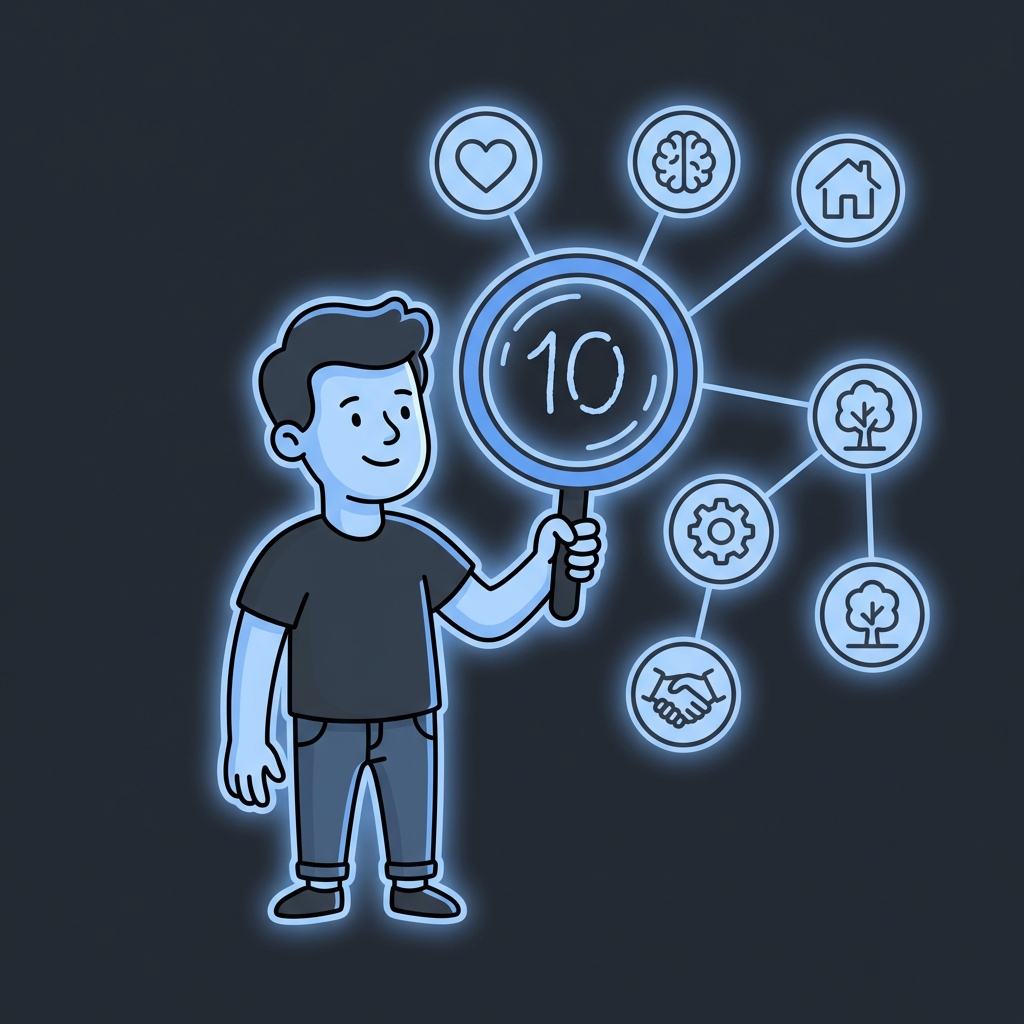
This isn’t about chasing tens across the board—it’s about seeing where support would make the biggest difference.
The magic happens when you stop trying to fix everything and start noticing how your life areas actually connect and support each other.
Choosing Your Domains
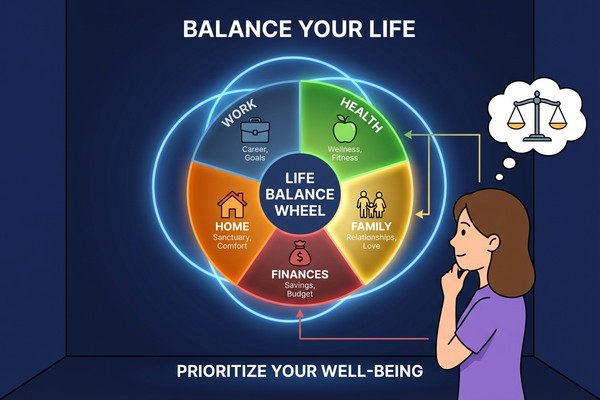
Before you can map anything, you need to decide what actually matters in your life right now. The standard life wheel usually includes things like career, health, relationships, finances, personal growth, recreation, and family. But your life might not fit those neat categories.
Maybe “home environment” deserves its own section because clutter genuinely affects your mental state. Maybe “creative expression” matters more to you than “recreation.” Maybe you need to separate “extended family” from “immediate family” because those relationships require completely different kinds of attention.
The point isn’t to use someone else’s template—it’s to acknowledge the domains that actually shape your daily experience. A single parent’s wheel might include “childcare logistics” as its own category. A caregiver’s wheel might separate “my health” from “their health.” Someone building a business might need “admin/operations” separate from “creative work.”
Think about what you actually spend mental energy tracking and worrying about. Those invisible loads you carry? They deserve their own sections. The goal is to create a map that reflects your actual life, not some idealized version of what a balanced life should look like.
Rating Without Judgment
Here’s where most life assessment tools go wrong: they ask you to rate everything on a scale that implies you should be striving for perfection. A five means you’re failing. A ten means you’ve got it all figured out. But what if we approached it differently?
Instead of rating each domain from one to ten, try thinking in terms of “supported” versus “unsupported.” A high score doesn’t mean everything is perfect—it means you have systems, people, or structures that help you manage that area without it consuming all your mental energy.
Your health score might be high not because you’re an elite athlete, but because you have a doctor you trust, a medication routine that works, and friends who’ll check in when you’re struggling. Your work score might be high not because you love every moment, but because you have clear boundaries, supportive colleagues, and tasks that don’t follow you home.
On the flip side, a low score doesn’t mean you’re failing—it means you’re carrying too much of the load alone. Maybe your finances are technically fine, but you’re the only one who remembers to pay bills, track expenses, and plan for the future. Maybe your home is clean, but you’re doing all the emotional labor of noticing what needs attention.
> The question isn’t “Am I succeeding?” It’s “Am I supported?”
This shift in perspective changes everything. Instead of feeling guilty about low scores, you can get curious about what support might look like in those areas.
Seeing the Connections
Once you’ve mapped your current state, the real insights emerge in the spaces between domains. Notice which areas seem to drag others down when they’re struggling. Notice which areas, when they’re going well, seem to lift everything else.
For many people, sleep is a keystone domain—when it’s supported, everything else becomes more manageable. For others, it might be childcare logistics or financial stability. These aren’t necessarily the areas you’d expect to be most important, but they’re the ones that create ripple effects throughout your life.
You might discover that your low relationship score isn’t really about the relationships themselves, but about not having enough time or energy to invest in them because other areas are consuming all your resources. Or you might notice that your work stress is actually rooted in financial anxiety, not the job itself.
Sometimes the connections reveal bottlenecks—single points of failure that put pressure on everything else. Maybe you’re the only one in your household who knows where important documents are kept, or the only one who remembers family birthdays, or the only one who notices when you’re running low on groceries.
The Two-Domain Strategy
Here’s where most people make the mistake of trying to improve everything at once. They see their wheel, notice all the low scores, and immediately start making ambitious plans to transform their entire life. Three weeks later, they’re exhausted and nothing has actually changed.
Instead, try this: pick one domain to actively care for and one domain to simply maintain. That’s it. Not seven improvement projects, not a complete life overhaul—just two areas of focus.
Your “care” domain gets intentional attention and support. Maybe you decide to really address your sleep by creating better boundaries around bedtime, or maybe you decide to get support for household management by hiring a cleaner or asking family members to take on specific responsibilities.
Your “maintenance” domain is one that’s currently working okay but could easily slip if you ignore it completely. Maybe your friendships are in a good place, but they need occasional check-ins to stay that way. Maybe your finances are stable, but they need regular attention to remain so.
Everything else? You’re not ignoring it, but you’re not actively trying to optimize it either. You’re just letting it be what it is while you focus your limited energy on the two domains that will make the biggest difference.
This approach acknowledges what most productivity advice ignores: you have finite capacity for improvement projects. Trying to level up everything at once is a recipe for burnout, not balance.
The Support Question
For each domain on your wheel, especially the ones where you’re feeling unsupported, ask yourself: “What would move this score the fastest?” Not “What would make this perfect?” but “What single change would provide the most relief?”
Sometimes the answer is adding support—hiring help, asking for assistance, or finding tools that reduce the mental load. Sometimes it’s about removing obstacles—saying no to commitments that drain energy without adding value, or automating tasks that don’t need your personal attention.
The goal isn’t to achieve some mythical state of life balance. It’s to reduce the number of areas where you’re carrying the full weight alone. It’s to create enough support in key areas that you have capacity to handle the inevitable challenges that life throws at you.
Support doesn’t mean perfection—it means you’re not doing it all alone.
When you approach your life areas this way, the wheel becomes less about judgment and more about clarity. It helps you see where your energy is going, where you might need help, and where small changes could create meaningful relief.
This kind of visibility is exactly what Backlit is designed to support—helping you track and manage the domains that matter to you without turning yourself into a productivity project. Because sometimes the most radical thing you can do is simply notice what you’re already carrying, and ask what support might look like.
This article was created with collaboration between humans and AI—we hope you ❤️ it.