You decide to start waking up thirty minutes earlier to finally establish that morning routine you’ve been craving. It sounds so simple—just set the alarm a bit sooner, right? But three days in, you’re more exhausted than before, snapping at your kids over breakfast, and that peaceful morning feels like a cruel joke.
What happened? You treated your life like a simple to-do list when it’s actually a complex network. That “small” change of waking up earlier created a cascade you didn’t anticipate: less sleep meant you needed more coffee, which meant a later bedtime because of the caffeine, which meant even less sleep the next night. Meanwhile, your earlier wake-up time collided with your partner’s shower schedule, creating bathroom traffic that made everyone late.
Welcome to the world of dependencies—the invisible connections that make one tiny adjustment feel like pulling a thread that unravels everything.
Understanding Life’s Hidden Connections
In software development, a dependency is when one component relies on another to function properly. Change the first component, and you risk breaking everything that depends on it. Your life works the same way, except the dependencies are often invisible until something breaks.
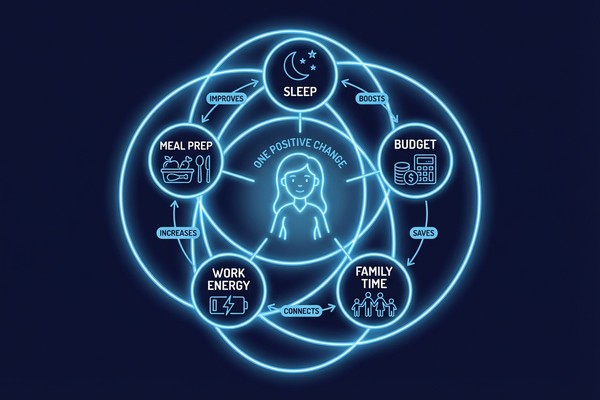
Consider Sarah, a working mom who decided to join a 6 AM fitness class. On paper, it looked perfect—exercise before anyone else woke up, no schedule conflicts. But she didn’t map out the dependencies. The early workout meant she needed to prep her gym bag the night before, which cut into her evening routine of preparing lunch for her daughter. So she started waking up even earlier to pack lunch in the morning, which made her too tired to meal prep on Sundays, which meant more expensive and less healthy weekday dinners, which affected the family budget and everyone’s energy levels.
One “simple” fitness goal triggered a chain reaction across sleep, meal planning, finances, and family dynamics. The fitness class wasn’t the problem—ignoring the dependency network was.
Most productivity advice treats changes as isolated events. “Just wake up earlier.” “Just meal prep on Sundays.” “Just say no to commitments.” But these suggestions ignore the intricate web of constraints that govern how life actually works.
The reason small changes feel impossibly hard isn’t because you lack willpower—it’s because you’re trying to change one thing in a system where everything connects to everything else.
The Anatomy of Everyday Dependencies
Let’s trace a common dependency chain that governs millions of working parents’ days: childcare → meetings → meals → sleep.
Your childcare arrangement determines when you can schedule important meetings. Those meeting times affect when you can grocery shop or meal prep. Your meal situation influences your family’s evening routine and energy levels. The evening routine determines bedtime, which sets tomorrow’s wake-up time, which circles back to affect your childcare handoff schedule.
Break any link in this chain, and the whole system wobbles. Your babysitter gets sick, so you miss the client meeting, so you work late to catch up, so dinner becomes takeout again, so bedtime gets pushed back, so tomorrow morning is chaos, so you’re frazzled dropping the kids off, so you start the workday already behind.
This isn’t poor planning—it’s the reality of interdependent systems. Yet we blame ourselves for not being more “resilient” or “organized” when our carefully constructed routines crumble at the first disruption.
Traditional time management treats your schedule like a Tetris game—find the right blocks and fit them together efficiently. But life isn’t Tetris. It’s more like a mobile sculpture where moving one piece changes the balance of everything else. Touch the wrong element, and the whole thing starts swaying wildly.
Why Most Plans Ignore Reality
The planning fallacy isn’t just about underestimating time—it’s about underestimating connections. We focus on the direct path to our goal while ignoring all the systems that need to align for that path to work.
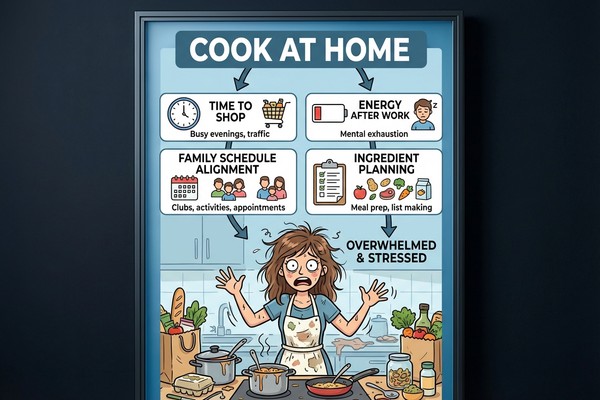
Take the classic “I’ll start cooking dinner at home instead of ordering takeout” resolution. The direct path seems obvious: buy groceries, cook food, eat at home, save money. But the dependency analysis reveals a different story:
Cooking at home depends on having ingredients, which depends on grocery shopping, which depends on having time to shop, which depends on your work schedule and childcare coverage. It also depends on having energy to cook, which depends on how your day went, which depends on a dozen other factors. And it depends on everyone being home at roughly the same time, which depends on after-school activities, commute times, and work demands.
When the plan fails, we assume we lack discipline. But often, we simply designed a change that required too many other things to go perfectly.
The most successful changes aren’t the most ambitious ones—they’re the ones that work within existing constraints rather than requiring everything else to change first.
Shifting from Self-Blame to System Design
Understanding dependencies is liberating because it shifts the focus from personal failings to system design. When your morning routine falls apart, instead of beating yourself up for lacking consistency, you can ask: “What dependencies did I miss? What constraints was I ignoring?”
Maybe your morning routine failed because it assumed your partner would handle the kids’ breakfast, but you never actually confirmed this arrangement. Or it required you to go to bed earlier, but your work emails don’t stop until 10 PM. Or it depended on having workout clothes ready, but your laundry schedule doesn’t align with your fitness plans.
The goal isn’t to eliminate all dependencies—that’s impossible. The goal is to see them clearly so you can design around them instead of being surprised by them.
This perspective transforms how you approach change. Instead of asking “How can I force this to work?” you start asking “What would need to be true for this to work easily?” Instead of pushing harder against resistance, you look for the bottlenecks and constraints that create the resistance in the first place.
Mapping Your Dependencies
Here’s a practical exercise that can save you weeks of frustration: before implementing any significant change, create a simple dependency map.
Pick one goal you’ve been struggling to achieve. Write it in the center of a page, then draw lines connecting it to everything it depends on. Don’t just list the obvious requirements—dig into the second and third-order dependencies.
For example, if your goal is “exercise three times per week,” your map might include:
• Time slots when you can work out
• Childcare or family coverage during those times
• Appropriate workout clothes and equipment
• Energy levels (which depend on sleep, nutrition, stress)
• Transportation to gym or space at home
• Recovery time that doesn’t interfere with other commitments
Now look at each dependency and ask: “What could disrupt this?” Your childcare depends on your babysitter staying healthy. Your energy levels depend on work stress staying manageable. Your time slots depend on no urgent deadlines appearing.
This isn’t pessimistic thinking—it’s realistic planning. When you can see the potential disruption points, you can either strengthen them or build in alternatives.
Design Principle: Change the Bottleneck
The most powerful insight from dependency thinking is this: instead of trying to change symptoms, change the bottleneck that’s creating them.
If you’re constantly running late in the morning, you might try setting seventeen different alarms or laying out clothes the night before. But if the real bottleneck is that your kids can’t find their school supplies, no amount of personal optimization will solve the problem. Fix the supply organization system, and the morning rush improves automatically.
If you’re struggling to eat healthy meals, you might focus on willpower and meal planning. But if the real bottleneck is that you’re too exhausted after work to cook anything elaborate, the solution isn’t better recipes—it’s addressing what’s draining your energy or finding ways to prep when you do have energy.
This is why so many productivity hacks fail. They optimize around the wrong constraint. They assume the bottleneck is your personal habits when it might be your work environment, your family’s schedule, or your living situation.
The most effective changes feel surprisingly easy because they remove friction from the whole system instead of requiring you to push harder against it.
Beyond Individual Optimization
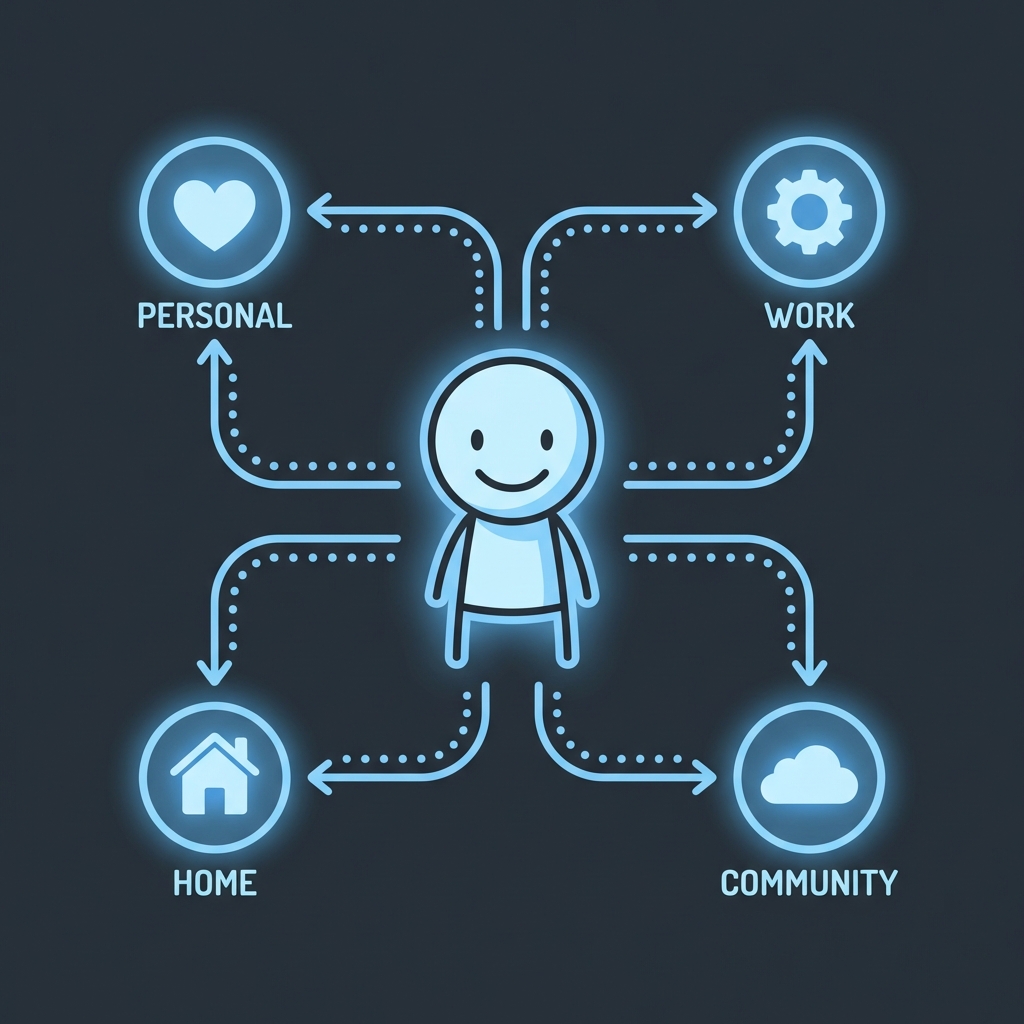
This dependency thinking reveals why so much productivity advice feels tone-deaf. It assumes you’re an isolated individual with complete control over your schedule and environment. But most of us are nodes in complex networks of family, work, and community obligations.
You can’t optimize your way out of systemic constraints. If your workplace expects immediate responses to emails at all hours, no morning routine will give you true peace of mind. If your childcare situation is precarious, no time management system will eliminate the underlying stress.
This doesn’t mean you’re powerless—it means you need tools that understand and work with your constraints rather than pretending they don’t exist.
The future of productivity isn’t about helping individuals do more things faster. It’s about creating systems that can see the whole network, understand the dependencies, and suggest changes that respect the constraints of real life. Systems that don’t just track what you need to do, but understand what needs to happen for you to actually be able to do it.
Until then, the most radical thing you can do is stop blaming yourself for struggling with changes that ignore the intricate web of dependencies that make up your actual life. Your life isn’t broken—it’s just more complex than most planning systems assume.
This article was created with collaboration between humans and AI—we hope you ❤️ it.